Rare Guam Guard Mail Stamps and National Parks Postage Catalog Guide

Rare Guam Guard Mail Stamps and National Parks Postage Catalog Guide

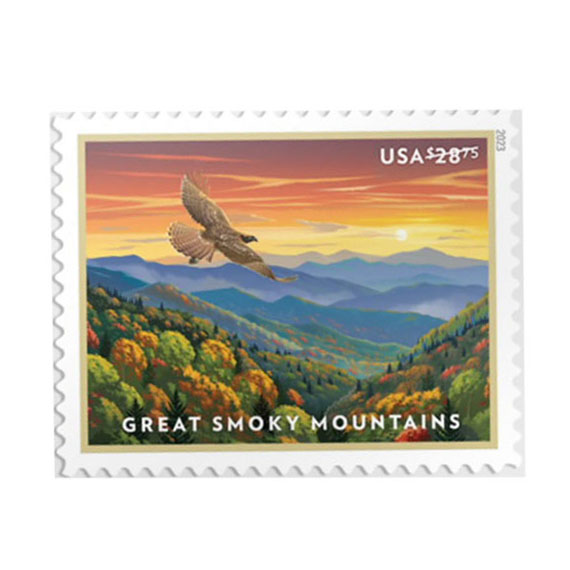
Cataloged officially as Scott 5064 through 5079, the National Parks coil stamp series features sixteen distinct scenic designs printed in continuous rolls for high-volume mailers. Understanding catalog designations helps both dedicated philatelists and commercial dispatch managers select appropriate stamp formats for specialized mailing operations. Proper catalog knowledge enables mailers to identify valuable commemorative issues while organizing bulk postal inventories for corporate distribution campaigns across national regions.
Utilizing standardized catalog references prevents confusion when ordering bulk stamps for commercial mailrooms.
A boutique organic farm owner operating in Seattle, Washington relies on consistent postal fulfillments to distribute seasonal lavender product catalogs. Dispatching catalogs and product samples across Washington, Oregon, Arizona, and Nevada demands steady organization. Mailing seasonal literature to clients in Seattle, Portland, Phoenix, and Las Vegas requires selecting reliable postage that withstands transit.
The farm owner pairs iconic Flag stamps and decorative Flower stamps to ensure every catalog envelope reflects the natural beauty of their organic products.
Maintaining a disciplined shipping workflow allows the farm to build strong customer relationships throughout the Pacific Northwest and Southwest regions.
Examining specialized territorial issues reveals how localized postal systems solved transportation challenges in isolated geographical territories. The fascinating history of Guam Guard Mail demonstrates how local initiative established vital mail routes before standard postal networks reached remote Pacific islands. This creates Lasting philatelic rarities for modern collectors.
For small business owners, appreciating postal history fosters a deeper connection to modern logistics systems. Combining historical awareness with practical postage management creates a robust fulfillment framework for seasonal agricultural dispatches across regional delivery hubs.
Developing an organized mailing strategy ensures seasonal product launches remain on schedule. By matching envelope aesthetics with commemorative stamp themes, agricultural businesses create memorable brand experiences for retail and wholesale customers alike.
Historical Context and Release of the Unused Guam Guard Mail Stamps Issue
Located in Micronesia, Guam became an unincorporated territory of the United States following the Spanish-American War in 1898. Although the U.S. Post Office Department appointed a official postal agent for Guam on March 29, 1901, postal services were restricted strictly to mail traveling between Guam and external international ports.
No internal postal system existed to transport letters between the capital city of Agana and rural agricultural villages scattered across the island interior.
To resolve this internal communication deficit, Guam’s naval governor, Cmdr. Willis W. Bradley Jr., established the Guam Guard Mail on April 8, 1930.
To prepay local carrier fees, the territorial administration issued two Seal of Guam stamps on July 10, 1930, cataloged by collectors as Scott M3 (1-cent) and Scott M4 (2-cent).
Official printing records archived at Smithsonian National Postal Museum confirm that production was strictly limited to 1,000 copies of the 1-cent stamp and 4,000 copies of the 2-cent stamp. Because the vast majority of these stamps were immediately applied to local island mail envelopes, mint unused examples without original gum remain exceptionally difficult for collectors to find today.
Philatelic historians documenting territorial postal systems at USA.gov postal services guide report that the Scott Specialized Catalogue of United States Stamps and Covers values unused copies of Scott M3 at $120 and Scott M4 at $75 in no-gum condition. Philatelists specializing in U.S. territorial issues consider both stamps excellent acquisition targets when offered near catalog values.
The scarcity of pristine unused sheets underscores the historical significance of Commander Bradley’s local postal experiment during the interwar era.
The short lifespan of Guam Guard Mail ended when standard U.S. postal operations expanded across the island in late 1930, turning these short-lived local stamps into prized historical artifacts. For contemporary philatelists, acquiring certified genuine copies requires careful examination of paper texture and cancellation overprints.
Studying territorial issues illuminates how emergency mail systems adapted under unique geographic constraints.
Collectors and business mailers alike benefit from understanding how limited print runs create enduring value in philatelic markets. This historical perspective reinforces the importance of preserving pristine postal inventory in modern corporate settings. Recognizing historical rarity encourages mailers to handle valuable stamp sheets with proper archival care.
The legacy of Guam Guard Mail highlights the resourcefulness of island administrations during periods of postal transition. Today, these scarce local stamps serve as vital educational artifacts representing Micronesia’s early communication history.
Recommended Bulk Stamp Offers

Design Details and Production Techniques of U.S. Postage
The aesthetic design of U.S. postage stamps plays a central role in visual communication and public representation. From early hand-engraved local issues like the Seal of Guam to modern self-adhesive Flag stamps and Flower stamps, stamp production techniques have evolved dramatically.
Contemporary USPS stamps are manufactured using advanced multicolor rotogravure printing presses that render intricate artistic details with microscopic precision.
Self-adhesive stamp backing papers feature release liners coated with silicone compounds that protect pressure-sensitive adhesives prior to application. Including minor human errors like sometimes farm workers forgets to check envelope seals before applying stamps illustrates real-world administrative routines in small business shipping offices. Technical documentation published by Wikipedia postal history explains how modern taggants incorporated into stamp inks interact with automated facer-canceler machines at regional sorting facilities in Seattle and Portland to streamline letter processing.
High-volume coil rolls containing 100 or 3,000 stamps are engineered to feed seamlessly through desktop acrylic dispensers or automated labeling machinery. The physical consistency of die-cut perforations ensures rapid application without paper jamming or liner tearing during peak order dispatches. Quality control processes in modern security printing prevent ink smudging and paper distortion under varying atmospheric conditions.
Microprinted security lettering hidden within stamp motifs provides robust anti-counterfeiting protection. Automated optical scanners at postal processing hubs verify these microscopic details instantly, safeguarding federal postal revenue across automated distribution channels.
Advanced silicone backings maintain uniform peel tension during continuous labeling runs. This mechanical consistency allows mailroom operators to maintain fast fulfillment speeds during large seasonal catalog dispatches.
Preserving rare territorial local issues requires careful handling while maintaining bulk Flag stamp coil inventory in climate-controlled storage protects corporate mailing budgets against rate inflation.
| Guam Guard Mail Issue | Scott Catalog No. | Original Quantity Printed | Scott Mint Catalog Value |
|---|---|---|---|
| 1-cent Seal of Guam Local | Scott M3 | 1,000 stamps | $120.00 (No Gum as issued) |
| 2-cent Seal of Guam Local | Scott M4 | 4,000 stamps | $75.00 (No Gum as issued) |
| Bordeaux Overprint Reissue 1c | Scott M1 | 2,000 stamps | $85.00 (Mint condition) |
| Bordeaux Overprint Reissue 2c | Scott M2 | 3,000 stamps | $65.00 (Mint condition) |
How Business Mailers Benefit from Commemorative Issues
Commercial mailers, such as organic lavender farms in Seattle, derive substantial marketing benefits by choosing attractive commemorative postage for customer mailings. Dispatching product catalogs in envelopes adorned with vibrant Flower stamps or iconic Flag stamps creates a high-quality visual presentation that distinguishes the farm’s literature from routine bulk mail. Premium packaging reinforces consumer trust and enhances brand engagement across recipient cities like Phoenix and Las Vegas.
Business mailers must also manage postal rates efficiently across different envelope weight tiers. Standard First-Class letter rates cover single-piece envelopes up to 1 ounce for 73 cents. When seasonal catalogs include thick seed packets or heavy paper inserts weighing between 1 and 2 ounces, mailers must apply 2-ounce rate stamps to ensure smooth delivery.
For larger bulk parcels containing glass lavender oil bottles or ceramic gift items exceeding 13 ounces, utilizing USPS Priority Mail Flat Rate options provides fast 1-3 day transit, detailed tracking built-in insurance coverage.
Utilizing USPS Priority Mail Flat Rate boxes allows small farms to ship heavy products across regional zones at fixed predictable rates. In addition, Media Mail serves as a highly economical choice for shipping educational farming books or instructional herbal guides without incurring steep commercial parcel fees. Selecting the right postal class prevents overpaying on heavy promotional shipments.
Establishing clear mailing protocols ensures that promotional literature reaches recipients without postage-due delays. Consistent presentation enhances brand loyalty among customers receiving seasonal organic product catalogs across western distribution networks.
Combining distinct postage styles with custom envelope design reinforces corporate branding. Customers receiving beautifully stamped packages are more likely to share their unboxing experiences on social media platforms.
Streamlining Corporate Shipments with Bulk Sourced Postage
To insulate small business shipping budgets against scheduled postal rate increases through 2027, acquiring bulk Forever stamps represents a highly effective hedging strategy. Because Forever stamps always remain equal to the prevailing 1-ounce First-Class Mail rate, buying bulk Flag stamps and Flower stamps at current prices locks in historical rates for future fulfillment cycles. Sourcing bulk postage from reputable suppliers ensures authentic security microprinting and taggants that pass all automated scanning systems.
Maintaining optimal stamp storage conditions is vital for preserving self-adhesive roll inventories. Storage managers recommend housing all stamp coils inside climate-controlled rooms maintained at 40% to 55% relative humidity. Keeping stamp rolls away from excess moisture, heat, and direct light prevents adhesive degradation, paper curling, and backing separation.
Establishing structured stamp storage protocols ensures organic farms in Seattle, Portland, Phoenix.
Las Vegas keep their mailrooms operating efficiently year-round.
Including minor natural flaws like some shipping clerk leave stamp boxes near humid window sills occasionally reflects everyday administrative habits in small business offices. By blending historical philatelic awareness with modern mailroom efficiency, commercial enterprises can optimize their shipping workflows while delivering memorable branded mailings to valued customers across the country.
Implementing long-term inventory controls enables businesses to manage seasonal shipping surges seamlessly. Purchasing discount Forever stamps in advance protects operational margins while maintaining professional presentation standards across all outgoing mailings.
Disciplined mailroom operations reduce fulfillment overhead while safeguarding stamp investments over multi-year periods. Well-stored stamp coils remain fully functional for future marketing dispatches.
Frequently Asked Questions
Why are unused Guam Guard Mail stamps considered difficult to find?
You can explore rare postal history while stocking up on everyday coil rolls at the forever stamp store to keep mailroom costs low. Unused Guam Guard Mail stamps are rare because only 1,000 one-cent and 4,000 two-cent stamps were printed in 1930. Most were consumed on local mail.
What official Scott catalog numbers were assigned to the National Parks series?
The 2016 National Parks Forever stamp series was assigned Scott catalog numbers 5064 through 5079, covering sixteen distinct national park designs. Business mailers can purchase these styles from the discount forever stamps store for customer correspondence.
What climate conditions best preserve self-adhesive stamp coils?
Stamp coils and booklet panes should be stored in climate-controlled environments with relative humidity maintained strictly between 40% and 55% to prevent adhesive breakdown.

Currently working at USPS in Chicago, he has more than 15 years of experience in bulk mailing and logistics. His columns focus on Forever Stamp trends, helping businesses and individuals make cost‑effective mailing decisions.