Five Joke Paintings, Nearly $100,000: What the Duck Stamp Auction Proves About Cheap Stamps
Five Joke Paintings, Nearly $100,000: What the Duck Stamp Auction Proves About Cheap Stamps
Five joke paintings, zero votes from the judges, and nearly $100,000 raised for wetlands. That is the short version of what happened after the September 26, 2021 episode of HBO’s Last Week Tonight with John Oliver. The long version is more useful, because the auction proved something about attention — and it proved nothing at all about cheap postage. This article keeps the two apart.
What actually happened, in facts
On the September 26, 2021 episode, John Oliver spent a segment on the Federal Duck Stamp Contest: the only art contest run by the U.S. government, and the funding engine behind more than $1.1 billion raised for wetland habitat since 1934 — over $40 million a year. For the segment, the show secretly commissioned five satirical paintings and entered them in the contest. The paintings played with the contest’s hunting-theme rule — a duck in flight with the cartoon dog from the Nintendo game Duck Hunt in the background was the best known of them, painted by Eric Joyner. None of the five received a single vote from the judges. The show then auctioned all five on eBay, with every dollar going to the federal duck stamp program. The total was $99,723.42. The single highest price was $33,200, paid by Field & Stream — the magazine brand that first proposed the duck stamp idea in the 1930s — for the Duck Hunt painting, which now hangs in its offices.
Two corrections to the old version of this article. First, the per-painting prices it listed for the other four paintings were invented; only the $99,723.42 total and the $33,200 Duck Hunt sale are documented, so this revision keeps only those. Second, the show’s paintings were commissioned entries, not contest winners — the actual 2021 winner was James Hautman, with his redhead ducks, his record sixth win.
What the auction proves — and what it does not
| Claim | Verdict | Why |
|---|---|---|
| Attention can fund conservation | True | Five rejected paintings raised $99,723.42 because millions of viewers were watching |
| Cheap stamps fund conservation the same way | False | A bulk Forever stamp saves cents per piece; it donates nothing |
| The joke entries beat the real contest | False | Zero judge votes; the real winner’s painting became the $25 stamp |
| A good story raises response rates | True, with limits | The auction worked because the story was true and verifiable — invented stories do the opposite |
The usable lesson for a mailer is narrow: a true story on the envelope gets it opened, and the postage underneath still has to be bought at a sane per-stamp price. The auction is not a buying strategy. Nobody saves $99,723.42 by shopping for stamps.
A gallery’s mailing math
Example — a labelled illustration, not a customer story. An independent art gallery mails 250 exhibition invitations a quarter: 1,000 a year, each a 2-ounce mailer at the November 2026 rate of $1.11.
| How the postage is bought | Unit price | Annual cost (1,000 mailers) |
|---|---|---|
| At face value | $1.11 | $1,110.00 |
| Illustrative bulk price (what-if, not a quoted offer) | $1.02 | $1,020.00 — $90.00 less than face |
The saving is $90.00 a year — real money for a small gallery, and nowhere near auction money. The point is the discipline, not the size: a fixed per-piece cost, checked before ordering, repeated four times a year without surprises. Add a wax seal or a square envelope and the surcharge takes the piece to $1.60; a gallery that mails square invitations should budget that from the start instead of discovering it at the post office counter.
The rates behind the comparison
Rates checked November 2026. USPS First-Class Mail rates in effect since July 12, 2026 (USPS Notice 123).
| Mailing | November 2026 rate |
|---|---|
| 1-ounce First-Class letter (one Forever stamp) | $0.82 |
| Each additional ounce | $0.29 |
| 2-ounce letter | $1.11 |
| Postcard | $0.65 |
| Nonmachinable surcharge (square, rigid, wax seal) | $0.49 (letter total $1.31) |
| Global Forever stamp (1-ounce letter abroad) | $1.75 |
Art-Forward Forever Stamps
Buying the postage underneath the story
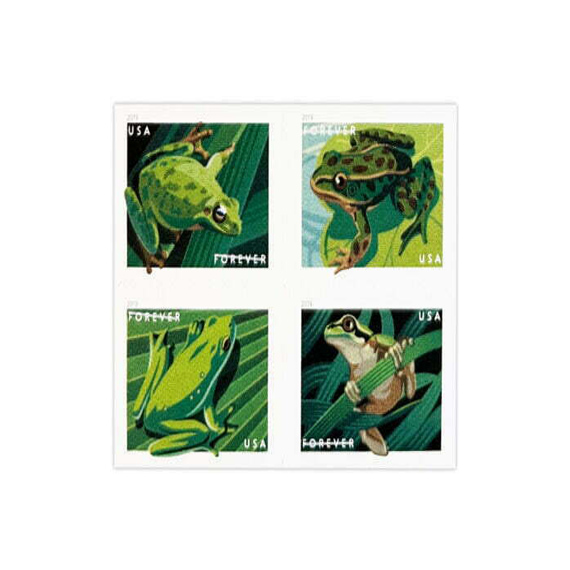
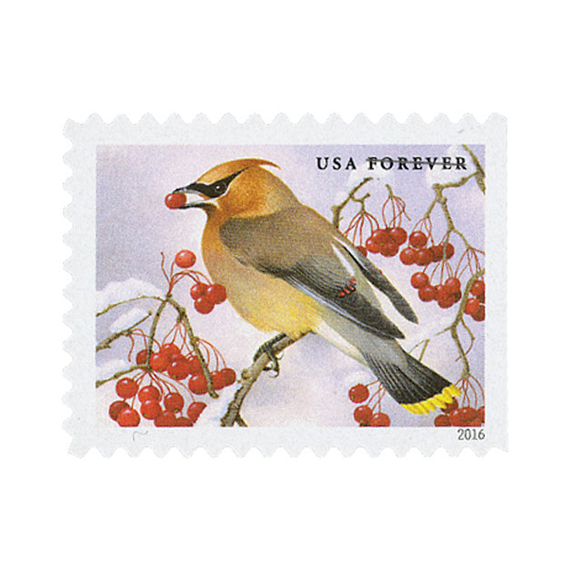
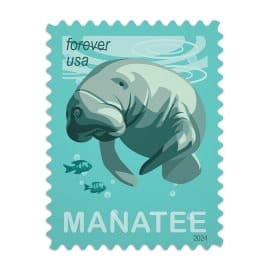
Divide first: total price divided by stamp count is the per-stamp price, and a seller who will not state the count is not a seller worth trusting. Verify a sample under a black light — genuine Forever stamps show UV tagging — and confirm a written returns policy before a large order. Pay with a method that lets you dispute. When the math checks out, compare the current per-stamp prices for forever stamps in bulk and order the quarter’s invitations in one purchase. A design that fits the gallery’s wall is a bonus, not a requirement: Save Manatees Forever stamps suit a conservation-minded mailing without changing the postage by a cent.
Store the stock flat, in acid-free sleeves, at 40–55% relative humidity, away from heat and damp. A 2-ounce mailer that needs a second stamp because the first one peeled off in sorting costs more than the stamp you saved.
Frequently asked questions
How much did John Oliver’s duck stamp paintings raise?
$99,723.42 in total, from the eBay auction of five satirical paintings, with all proceeds going to the federal duck stamp program.
Which painting sold for the most?
The Duck Hunt painting by Eric Joyner — a duck in flight with the Nintendo game’s cartoon dog behind it — sold for $33,200 to Field & Stream.
Did any of the joke paintings win the contest?
No. None received a single vote from the judges. The 2021 winner was James Hautman, with his painting of redhead ducks.
Are federal duck stamps valid postage?
No. They are $25 hunting permits and conservation revenue stamps. Letters need First-Class postage — a Forever stamp at $0.82 for 1 ounce.
The comparison to carry away: the auction raised nearly $100,000 because a true story reached millions of people; bulk postage saves a gallery $90 a year because the per-stamp math is checked before every order. Both are worth doing. Neither is a substitute for the other.

USPS professional based in New York with over 12 years of experience in postal operations. She writes about Forever Stamps, offering practical guidance on safe purchasing and mailing practices while closely following USPS policy updates.